Stereo-PIV software: all three velocity components
Available from PIVlab 4.0.
Standard (2D) PIV measures the two velocity components in the plane of the light sheet. With a second camera that looks at the light sheet from a different angle, PIVlab also measures the third component, the velocity through the light sheet (w). This is called stereo-PIV or 2D3C (two dimensions, three components).
From recording to 3D result in one program
PIVlab does not only analyse stereo-PIV images, it also records them. Recording, calibration and analysis happen in the same program, with the same panels as 2D PIV:
- Print the ChArUco calibration board that PIVlab creates for you, in the size you need.
- Place the board in the light sheet. The live image shows both cameras side by side, with the detected board markers, so you see at once whether both cameras see the board well. One click saves the board images of both cameras.
- Focus the tilted lenses with the sharpness display.
- Record the PIV images of both cameras, synchronized with the laser. PIVlab opens them directly in stereo mode.
- Run the lens and stereo calibration and the disparity correction. The next recording with the same setup keeps the calibration.
- Analyse, validate and export as usual: the results now include w.
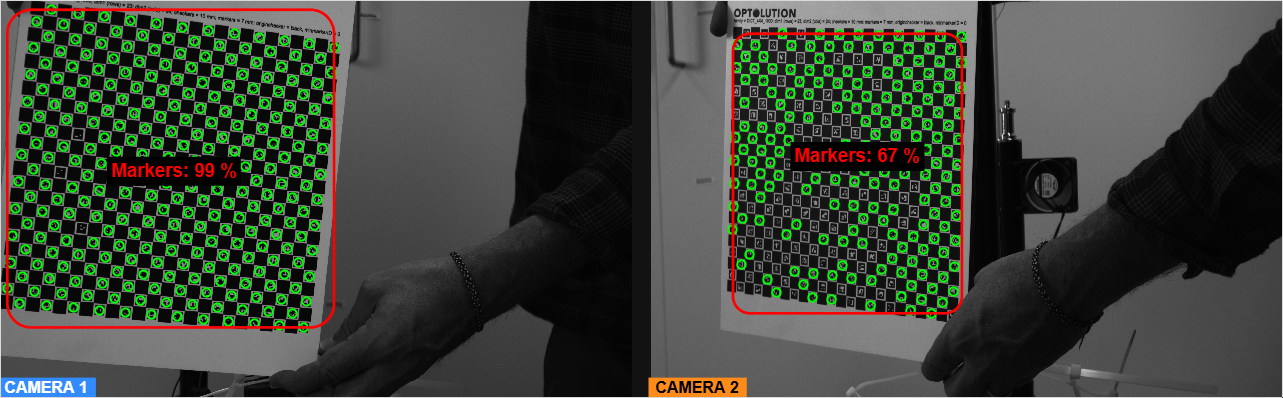
Images recorded with other systems can be imported as well. Everything is explained step by step in the manual: Stereo acquisition and Stereo-PIV (2D3C).
Try it before you buy anything
PIVlab contains a 3D flow and stereo-PIV simulator. You position two virtual cameras (with lens distortion) as you like, capture simulated calibration boards and generate a 3D flow, e.g. the 3D wake of a sphere. Then you import the images and go through the complete stereo-PIV workflow, as if you already had the equipment. This is also useful for learning and teaching stereo-PIV.
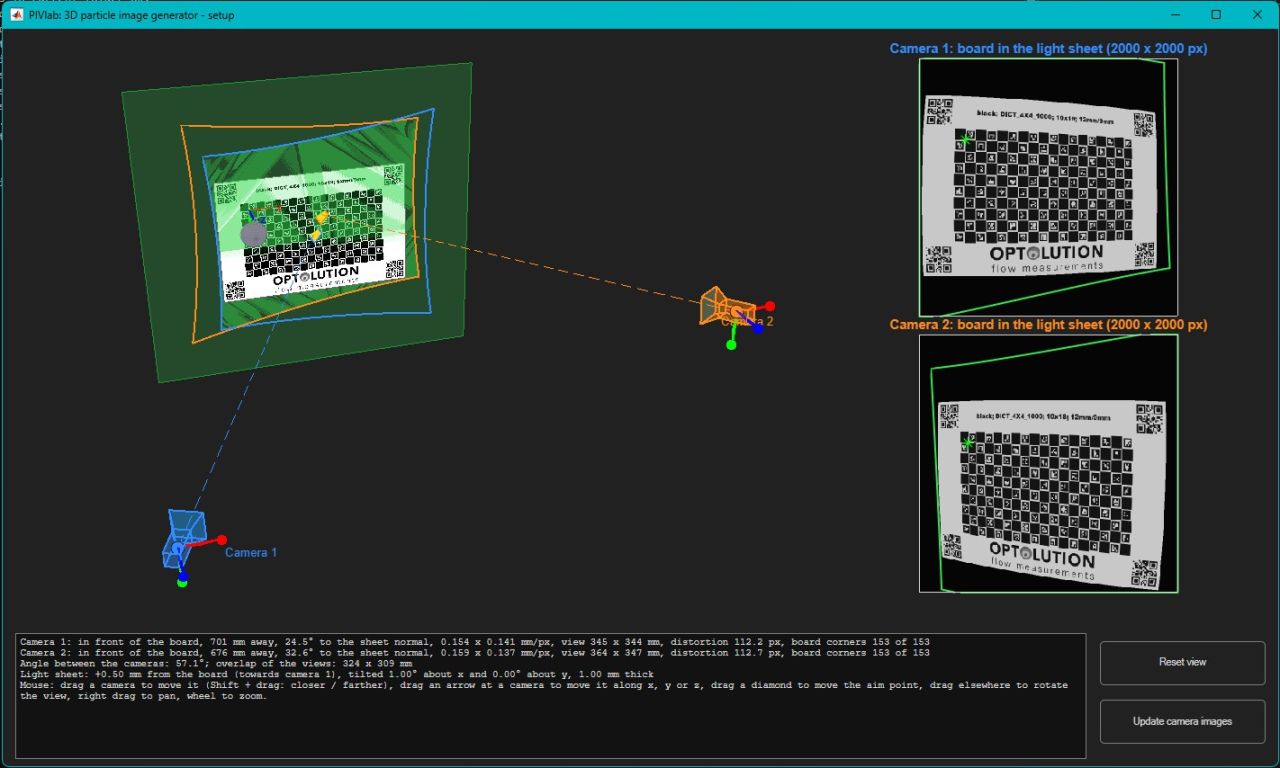
More in the manual: Synthetic particle image generation.
Hardware for stereo-PIV
- Two cameras look at the light sheet from different angles. The lenses are tilted with a Scheimpflug mount, so that the whole light sheet is in focus. PIVlab’s sharpness display helps you to adjust the tilt.
- OPTOLUTION cameras get Scheimpflug housings, so the lenses can be tilted directly.
- pco cameras: Scheimpflug mounts from pco are available through OPTOLUTION.
- Calibration target: included free of charge with a stereo set from OPTOLUTION.
Start with 2D PIV today and upgrade to stereo-PIV later by adding a second camera. Ask OPTOLUTION for a stereo set.